Joseph forgives his brothers
Sold by his own brothers. Years later, he held their lives in his hands.
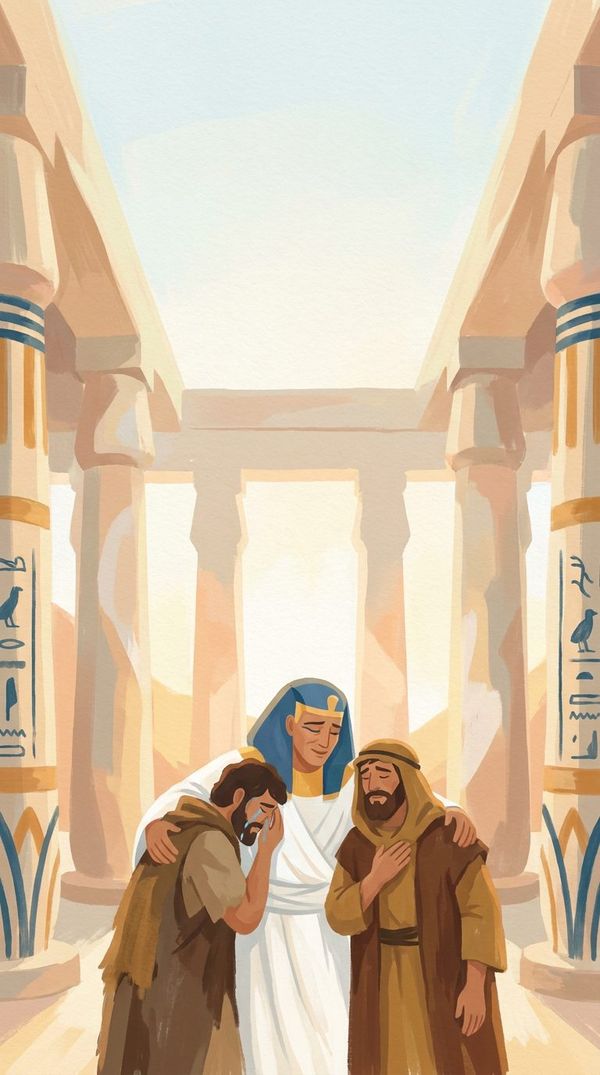
The story
Joseph's jealous brothers sold him into slavery. He was falsely accused and spent years in prison in Egypt. Then he rose to second-in-command of the whole country. When famine drove his brothers to Egypt begging for food, Joseph had every reason to get even. Instead he wept, told them who he was, and took care of their families.
What it means for you
Joseph's pain didn't come from strangers. It came from family, the people who were supposed to protect him. That kind of betrayal cuts deeper, and it doesn't heal quickly. Joseph didn't get over it in a weekend; the story covers more than twenty years.
What changed wasn't that his brothers earned forgiveness. Joseph came to see his story as bigger than their worst moment. He told them, in effect: you meant it for harm, but God used it for good, to save many lives.
That doesn't make what they did okay. Joseph tested them first to see if they had changed, and he was honest about the harm. But he refused to let their betrayal decide who he would become.
If someone close to you has hurt you, this story doesn't ask you to pretend it didn't happen. It shows that forgiveness can be slow, can have boundaries, and can still end in something you never expected.
How it turned out
The family was reunited, Joseph saved them from the famine, and his forgiveness held even after their father died.
Read the real Bible passage, hear the story read aloud, and find others who were in the same boat.
Same Boat matches what you're going through with someone in the Bible who's been there. Free to download on iPhone and Android.
Open in the appApp StoreGoogle Play