"O Death, you did not spare"
A raw cry against death, and then a seed that has to be buried before it can grow.
The story
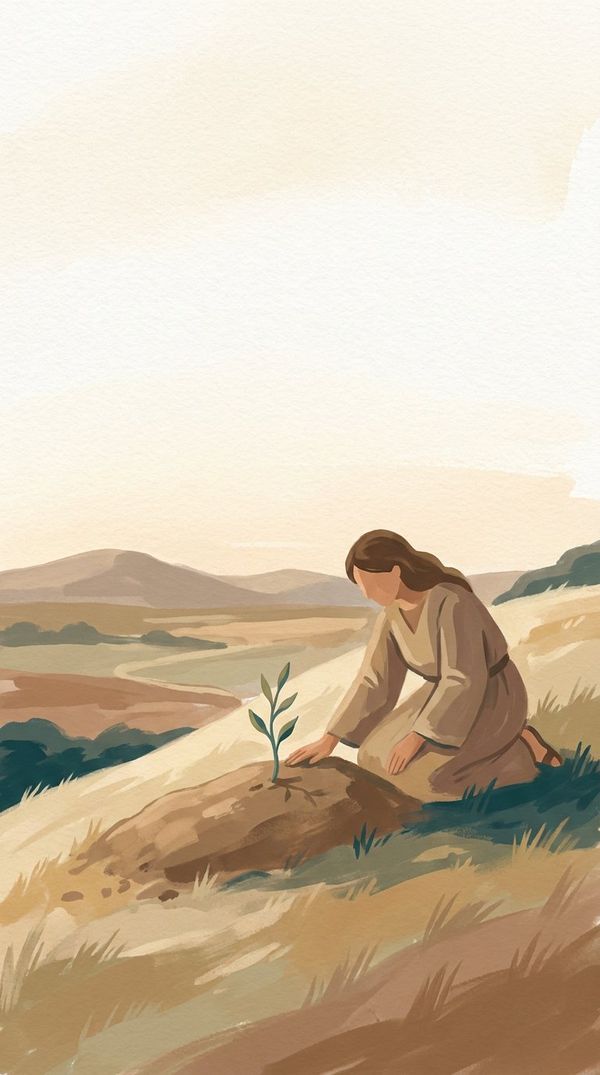
2 Meqabyan includes an honest lament. "O Death, who separated the souls of attractive persons from their flesh—woe arises from you." It names everyone death has taken: "the poor or the rich... the children or the elders, the daughters or the sons." It doesn't look away. But it ends with a promise that the dead will rise "in the blink of an eye," and elsewhere the book points to a wheat kernel: it won't grow unless it is buried first, and then "a single wheat kernel becomes many kernels."
What it means for you
This passage gives you permission to be angry at death. It shouts "woe" at it, over and over.
It refuses to pretend that losing someone is natural or fine.
But it doesn't end in the grave. A buried seed isn't gone; it's waiting to grow.
If you're grieving and the comfortable words feel empty, this lament is for you: name the loss honestly, and hold on to the seed.
How it turned out
The book teaches that death does not get the last word: the dead will rise when the Lord commands.
Read the real Bible passage, hear the story read aloud, and find others who were in the same boat.
Same Boat matches what you're going through with someone in the Bible who's been there. Free to download on iPhone and Android.
Open in the appApp StoreGoogle Play