Seeds in the ground
People were teaching that death is the end of the body. From prison, Paul's answer was a handful of seeds.
The story
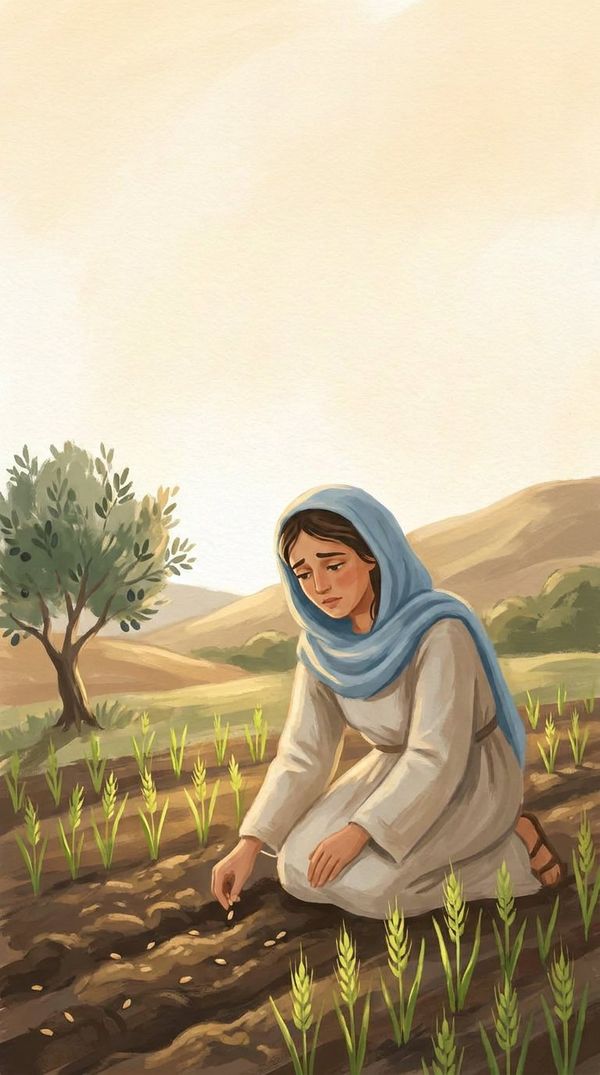
3 Corinthians is an ancient letter exchange, once read in the Armenian Bible. Christians in Corinth wrote to Paul, upset that two teachers were saying there is no resurrection of the body. Paul was in chains when the letter arrived, but "he forgat his bonds, and was sore afflicted," and said it would be better to die and be with the Lord than to hear such things. In his reply he pointed to something any farmer knows: they "know not, O Corinthians, the seeds of wheat or of other seeds, how they are cast bare into the earth and are corrupted and rise again by the will of God with bodies, and clothed."
What it means for you
Paul was so upset by false teaching about death that he forgot he was in prison.
He didn't answer with a lecture. He answered with a seed: buried, broken down, and then rising as something living and green.
A seed in the ground looks like an ending. It's a beginning.
If you're grieving someone you love, or facing your own death, this ancient letter offers a picture you can hold: what is buried is not lost. It will rise.
How it turned out
This correspondence was treasured by the Armenian and Syrian churches and read alongside Paul's other letters.
Read the real Bible passage, hear the story read aloud, and find others who were in the same boat.
Same Boat matches what you're going through with someone in the Bible who's been there. Free to download on iPhone and Android.
Open in the appApp StoreGoogle Play